Untangling Trust, Transparency, and Uncertainty in AI Literature and Policy
Abstract
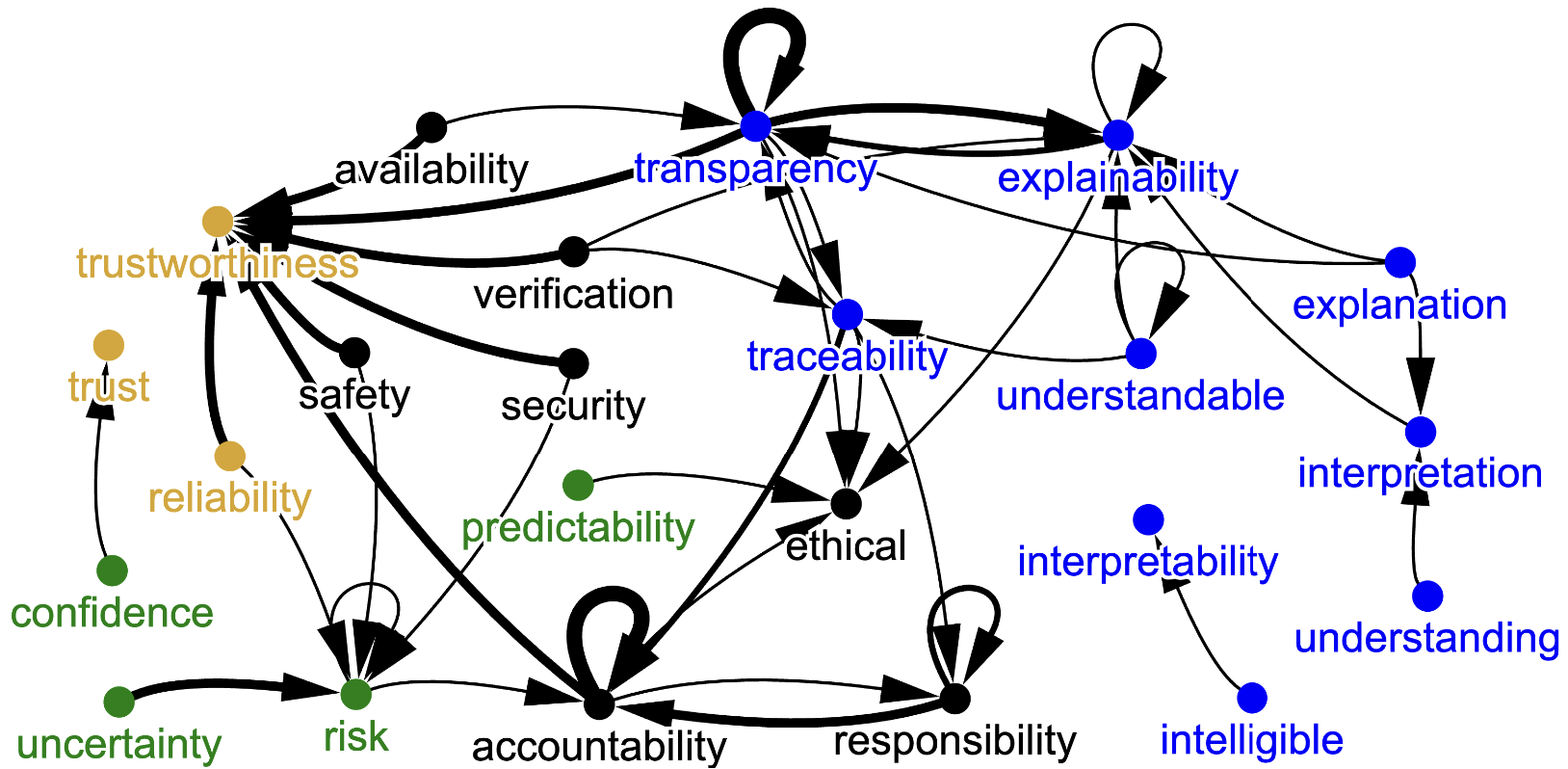
Trust, transparency, and uncertainty-awareness are widely cited as prerequisites for responsible and accountable machine learning (ML), yet their meanings and relationships remain inconsistent across research and policy. We present the first systematic review to examine how these concepts are defined and operationalized together across ML research, human–computer interaction, applied domains, AI policy, and technical standards. Analyzing 118 research papers, eight surveys of AI policy documents, and multiple national and international standards, we synthesize discussions on each concept and their relationships. We find that trust, transparency, and uncertainty are rarely defined explicitly in literature, limiting the transfer of meaning and findings between studies. In policy and standards, definitions are frequently circular or conflicting, creating ambiguous compliance expectations. Untangling the relationships between each concept, we argue that trust, transparency, and uncertainty are co-produced in ML, and show how this framing can improve conceptual clarity. Based on our findings, we provide recommendations to improve how we conceptualize, study, and implement ML systems in regard to each concept.
Authors



Citation
Untangling Trust, Transparency, and Uncertainty in AI Literature and Policy
Kai Nylund, Shani Spivak, Dakuo Wang, and Lace Padilla. AIES. 2026. DOI: 10.1609/aies.v9i3.43278
Khoury Vis Lab — Northeastern University
* West Village H, Room 302, 440 Huntington Ave, Boston, MA 02115, USA
* 100 Fore Street, Portland, ME 04101, USA
* Carnegie Hall, 201, 5000 MacArthur Blvd, Oakland, CA 94613, USA